Showing posts with label HISTORY. Show all posts

It Happened between April 15th & April 20th !


APRIL 15th

1865 – Abraham Lincoln dies without regaining consciousness after being shot the previous evening by actor John Wilkes Booth.


1892 – The General Electric Company is formed

1920 – Two security guards are murdered during a robbery in South Braintree, Massachusetts. Anarchists Sacco and Vanzetti would be convicted of and executed for the crime, amid much controversy.


1947 – Jackie Robinson debuts for the Brooklyn Dodgers, breaking baseball's color line.


1955 – McDonald's restaurant dates its founding to the opening of a franchised restaurant by Ray Kroc, in Des Plaines, Illinois


1970 – During the Cambodian Civil War, massacres of the Vietnamese minority results in 800 bodies flowing down the Mekong River into South Vietnam.


1989 – Hillsborough disaster: A human crush occurs at Hillsborough Stadium, home of Sheffield Wednesday, in the FA Cup Semi Final, resulting in the deaths of 96 Liverpool F.C. fans.


1989 – Upon Hu Yaobang's death, the Tiananmen Square protests of 1989 begin in the People's Republic of China


2002 – An Air China Boeing 767-200, flight CA129 crashes into a hillside during heavy rain and fog near Busan, South Korea, killing 128.

2010 – Volcanic ash from the eruption of Eyjafjallajökull in Iceland leads to the closure of airspace over most of Europe.


APRIL 16th

1178 BC – The calculated date of the Greek king Odysseus' return home from the Trojan War.

73 – Masada, a Jewish fortress, falls to the Romans after several months of siege, ending the Jewish Revolt.

1862 – American Civil War: A bill ending slavery in the District of Columbia becomes law.

1943 – Dr. Albert Hofmann discovers the psychedelic effects of LSD.


Hofmann Dreams (Projected Documentary) from Kaliptus on Vimeo.


1944 – Allied forces started bombimng of Belgrade,killing about 1,100 people. This bombing fell on the Orthodox Christian Easter.


1945 – The Red Army begins the final assault on German forces around Berlin.


1945 – More than 7,000 die when the German refugee ship Goya is sunk by a Soviet submarine torpedo.

1947 – Texas City Disaster: An explosion on board a freighter in port causes the city of Texas City, Texas, to catch fire, killing almost 600

1947 – Bernard Baruch coins the term "Cold War" to describe the relationship between the United States and the Soviet Union


1962 – from the USSR was sent the world's first SETI message.


1990 – The "Doctor of Death", Jack Kevorkian, participates in his first assisted suicide

2007 – Virginia Tech massacre: The deadliest spree killing in modern American history. Seung-Hui Cho, kills 32 and injures 23 before committing suicide.


APRIL 17th

1492 – Spain and Christopher Columbus sign the Capitulations of Santa Fe for his voyage to Asia to acquire spices.


1521 – Martin Luther speaks to the assembly at the Diet of Worms, refusing to recant his teachings.

1797 – Sir Ralph Abercromby attacks San Juan, Puerto Rico in what would be one of the largest invasions of the Spanish territories in America.


1895 – The Treaty of Shimonoseki between China and Japan is signed. This marks the end of the First Sino-Japanese War, and the defeated Qing Empire is forced to renounce its claims on Korea and to concede the southern portion of the Fengtien province, Taiwan and the Pescadores Islands to Japan.

1905 – The Supreme Court of the United States decides Lochner v. New York which holds that the "right to free contract" is implicit in the due process clause of the Fourteenth Amendment of the United States Constitution.

1924 – Metro-Goldwyn-Mayer studios is formed by the merger of Metro Pictures, Goldwyn Pictures, and the Louis B. Mayer Company.


1961 – Bay of Pigs Invasion: A group of CIA financed and trained Cuban refugees lands at the Bay of Pigs in Cuba with the aim of ousting Fidel Castro.


1964 – The Ford Motor Company unveils the Ford Mustang at the New York World's Fair.


1969 – Sirhan Sirhan is convicted of assassinating Robert F. Kennedy.

1970 – Apollo program: The ill-fated Apollo 13 spacecraft returns to Earth safely.


1975 – The Cambodian Civil War ends. The Khmer Rouge captures the capital Phnom Penh and Cambodian government forces surrender.


1982 – Patriation of the Canadian constitution in Ottawa by Proclamation of Queen Elizabeth II, Queen of Canada.

1986 – The Three Hundred and Thirty Five Years' War between the Netherlands and the Isles of Scilly ends.


APRIL 18th

1775 – American Revolution: The British advancement by sea begins; Paul Revere and other riders warn the countryside of the troop movements.


1783 – Fighting ceases in the American Revolution, eight years to the day since it began.

1902 – Quetzaltenango, second largest city of Guatemala, destroyed by Earthquake.

1906 – The 1906 San Francisco earthquake and fire destroys much of San Francisco, California.


1923 – Yankee Stadium, "The House that Ruth Built," opens


1930 – BBC Radio announces that there is no news on that day.

1942 – World War II: The Doolittle Raid on Japan. Tokyo, Yokohama, Kobe and Nagoya bombed.

1943 – World War II: Operation Vengeance, Admiral Isoroku Yamamoto is killed when his aircraft is shot down by U.S. fighters over Bougainville Island.

1954 – Gamal Abdal Nasser seizes power in Egypt.

1958 – A United States federal court rules that poet Ezra Pound is to be released from an insane asylum.


1980 - The Republic of Zimbabwe (formerly Rhodesia) comes into being, with Canaan Banana as the country's first President. The Zimbabwe Dollar replaces the Rhodesian Dollar as the official currency of Zimbabwe.

1983 – A suicide bomber destroys the United States embassy in Beirut, Lebanon, killing 63 people.

1988 – The United States launches Operation Praying Mantis against Iranian naval forces in the largest naval battle since World War II.

1996 – In Lebanon, at least 106 civilians are killed when the Israel Defense Forces shell the UN compound at Quana where more than 800 civilians had taken refuge.


APRIL 19th

Earliest day on which First Day of Summer or Sumardagurinn fyrsti can fall, while April 25 is the latest; celebrated on the first Thursday after April 18. (Iceland)

1775 – American Revolutionary War: The war begins with the battles of Lexington and Concord.

1936 – First day of the Great Uprising in Palestine.

1943 – World War II: In Poland, German troops enter the Warsaw ghetto to round up the remaining Jews, beginning the Warsaw Ghetto Uprising.

1943 – Bicycle Day – Swiss chemist Dr. Albert Hofmann deliberately takes LSD for the first time.


1960 – Students in South Korea hold a nationwide pro-democracy protest against their president Syngman Rhee, eventually forcing him to resign

1961 – The Bay of Pigs invasion of Cuba ends in success for the defenders.


1971 – Charles Manson is sentenced to death for the Sharon Tate murders.


1987 – The Simpsons premieres as a short cartoon on The Tracey Ullman Show


1989 – A gun turret explodes on the USS Iowa, killing 47 sailors.

1993 – The 51-day siege of the Branch Davidian building outside Waco, Texas, USA, ends when a fire breaks out. Eighty-one people die.


1993 – South Dakota governor George Mickelson and seven others are killed when a state-owned aircraft crashes in Iowa.


1995 – Oklahoma City bombing: The Alfred P. Murrah Federal Building in Oklahoma City, Oklahoma, USA, is bombed, killing 168. That same day convicted murderer Richard Wayne Snell, who had ties to one of the bombers, Timothy McVeigh, is executed in Arkansas.


1999 – The German Bundestag returns to Berlin, the first German parliamentary body to meet there since the Reichstag was dissolved in 1945.

APRIL 20th

1657 – Freedom of religion is granted to the Jews of New Amsterdam (later New York City).

1775 – American Revolutionary War: the Siege of Boston begins, following the battles at Lexington and Concord

1861 – American Civil War: Robert E. Lee resigns his commission in the United States Army in order to command the forces of the state of Virginia.

1862 – Louis Pasteur and Claude Bernard complete the first pasteurization tests.

1871 – The Civil Rights Act of 1871 becomes law.

1884 – Pope Leo XIII publishes the encyclical Humanum Genus.

1914 – 19 men, women, and children die in the Ludlow Massacre during a Colorado coal-miner's strike.

1918 – Manfred von Richthofen, aka The Red Baron, shoots down his 79th and 80th victims marking his final victories before his death the following day.

1926 – Western Electric and Warner Bros. announce Vitaphone, a process to add sound to film.

1939 – Adolf Hitler's 50th birthday is celebrated as a national holiday in Nazi Germany


1945 – World War II: Fuehrerbunker: Adolf Hitler makes his last trip to the surface to award Iron Crosses to boy soldiers of the Hitler Youth.

1961 – Failure of the Bay of Pigs Invasion of US-backed troops against Cuba

1978 – Korean Air Flight 902 is shot down by Soviets.


1985 – ATF raid on The Covenant, The Sword, and the Arm of the Lord compound in northern Arkansas.

1999 – Columbine High School massacre: Eric Harris and Dylan Klebold kill 13 people and injure 24 others before committing suicide at Columbine High School in Jefferson County,
Colorado.


2007 – Johnson Space Center Shooting: A man with a handgun barricades himself in NASA's Johnson Space Center in Houston, Texas before killing a male hostage and himself

2010 – Deepwater Horizon drilling rig explosion kills 11 and causes rig to sink, initiating a massive oil discharge in the Gulf of Mexico.


- All Rights Reserved 2010 - The Niles Lesh Project Follow NILES LESH / MIENFOKS on TWITTER !

Another Nickel In The Machine

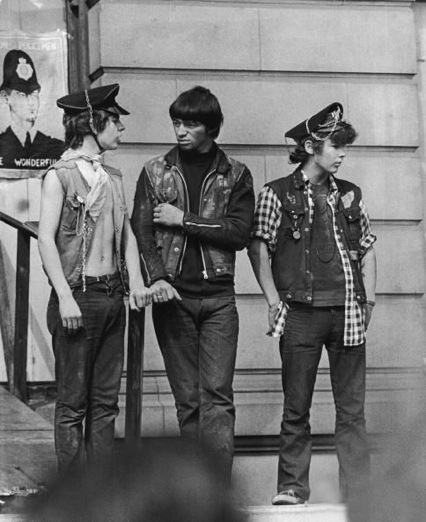
Three rather wimpy 'Hells Angels' guarding 144 Piccadilly - 1969
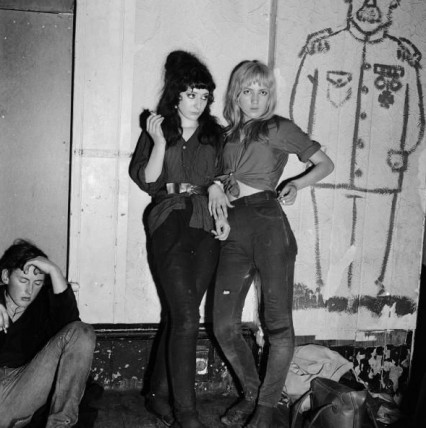
Eel Pie Island, 31st August 1960 
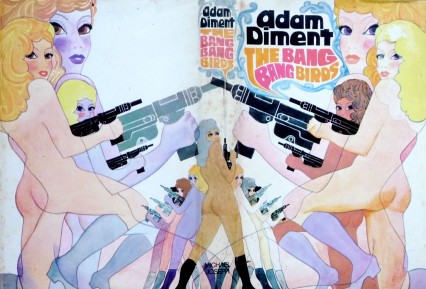
Adam Diment - the bang bang birds published in 1968

Another Nickel In The Machine is a blog about 20th century London (not particularly focused on the 60s), its history, its culture and its music. It is truly fascinating. Found thanks via Planetbarbarella.

Band of Angels

By Julia Gregson
Touchstone

It might be said that at heart, Band of Angels is a love story. But the course of love between Catherine Carreg and her childhood friend Deio is a convoluted, meandering one. Catherine and Deio grew up riding horses together in Wales in the 1850s. But when Catherine matures, her family puts a stop to her adventures with Deio, seeing it as improper for a young lady. After her mother dies in childbirth, Catherine feels lost and isolated. She wants to go out into the world and study medicine so she can help save lives, as a way to redeem a personal failure that she couldn't save her own mother.

Catherine escapes Wales with the help of Deio, who is a cattle driver. She dresses as a man and goes to London with him on a drive. Upon reaching London, Deio seems to want Catherine to stay with him, but she rejects him outright, refusing to see him after their furtive journey together. Catherine's determination to become a nurse or doctor is rewarded when she is accepted into Florence Nightingale's school for nurses. When Nightingale abruptly leaves for the Crimean war, Catherine begs to go with her.

In the meantime, Deio realizes the railroad will soon make his job as a cattle driver obsolete. Looking for other ways to make a living, he decides to sell horses to the Allied forces in the Crimea. He takes a number of his horses to Balaklava, knowing that Catherine is somewhere near there, and hoping he will find her somehow.

Catherine and Nightingale's other nurses end up in Scutari, far from the front, where thousands of wounded and ill soldiers are hospitalized. Here, they live in squalor, and food is a luxury. Soldiers die of typhus and other diseases more often than they die of wounds suffered on the battlefield. This is the most fascinating part of the story, but it takes more than half the book to get us to this point.

Gregson's research is strong, and she succeeds in making Wales, and the cattle drive to London, come alive for the reader. But there could have been much more about Nightingale and the procedures she used in the hospital in Scutari to offer the reader historical insight. Nightingale is a filmy character here, difficult to relate to, and the war itself seems very distant as well.

It is true that Nightingale has been characterized as standoffish in reality, but still, she had the passion to take her across the world and into hospitals where no women had been allowed before. We don't see much of that drive here. Catherine's motivation for going to the Crimea needed further development, as well. In addition, it seems a bit of a leap when Catherine starts longing for Deio after she so assuredly rejected him. The love story seems almost superfluous at times.

In spite of some plot and character flaws, the book, overall, does succeed in drawing the reader into a brutal world that we want to know more about. This is one of those imperfect books that keeps you reading, looking forward to more like this: “Blood was the hardest thing of all to wash out; all of them wore it like a permanent stain. They spent most of their time on the wards trying to take it from their tangled hair and old bandages, from faces and dolls and pictures and handkerchiefs; strange what the men carried closest to their hearts.”

Review by Natasha Bauman

Glamour: Women, History, Feminism

By Carol Dyhouse
Zed Books

The word glamour has lost a lot of its allure and power these days, bandied about by fashion writers who use glamour interchangeably with polished, chic, elegant, and sophisticated. (Hey, I've been guilty of this occasionally!) That was the conclusion I came to after reading Glamour: Women, History, Feminism by Carol Dyhouse, a scholarly and well-researched book by a social historian.

Society's attitude towards glamour has changed depending on the fashions of the time, Dyhouse argues. Although it might be easy to peg glamour as a male-manufactured concept that traps women with rigid concepts of female attractiveness and breeds a vicious consumer cycle, she sees glamour differently. Instead, glamour is a force associated with "women on the make": women who use the trappings of glamour—clothes, cosmetics, furs, feathers, and lavish jewelry—to transcend class and gender barriers and prescribed societal norms, and to escape the drudgery and burdens of everyday life.

To support her arguments, Dyhouse looks at the evolution and vilification of glamour throughout the twentieth century. Screen sirens and Hollywood films popularized it in the 1930s and '40s and inspired working class girls to emulate the styles of their favourite actresses. However, even when glamour was at its peak, conservative societal elements objected to it. Older generations deemed wearing cosmetics immodest. The editor of British Vogue encouraged young girls to sport a "natural English look" instead of the crass painted-on look of American actresses. The upper classes disapproved of working class girls dressing "above their station" in the hopes of attracting suitors who were better off.

Glamour fell out of fashion in later decades. The 1950s saw the rise of Dior's New Look and domestic femininity, which stressed demure, elegant beauty over artifice and excess—more Grace Kelly than Gloria Swanson. The '60s marked the rise of the gamine girl (e.g., Twiggy, Jean Shrimpton, Audrey Hepburn), whose mod clothes and doe-eyed innocence stood in marked contrast to the womanly aura of glamour girls. The emphasis on natural looks in the '70s meant an even more radical departure from glamour. But there were some signs of a resurgence: musicians, Motown acts, and the founding of Cosmopolitan magazine paved the way for the glamazons of the 1980s and the resurgence of full-blown glamour.

I realize I'm being glib in my summary of Glamour, but a short blog post can't do justice to the wealth of detail and research that Dyhouse presents here (with lots of illustrated examples, no less!). A scholarly book can easily slip into joyless perfunctory prose full of -isms and jargon, but she writes with a genuine enthusiasm for her subject. I really enjoyed this glamorous romp through the twentieth century, and hey, if anything, I will never take the word glamour for granted again.

Review by Lisa Wong

Cross-posted at Solo Lisa

Colonial Metropolis: The Urban Grounds of Anti-Imperialism and Feminism in Interwar Paris

By Jennifer Anne Boittin
University of Nebraska Press

Interwar Paris conjures up images of romance and renewal. From the ashes and rubble of the First World War, families reunite and rebuild under what seemed to be the end of the most dire of circumstances. Unfortunately, Colonial Metropolis fails to capture this magic, and yet it is an extremely thoughtful and methodical review of the local primary source material available, and would serve as a very strong academic referral source.

The author, Jennifer Anne Boittin, has a clear passion for the subject matter and conveys this well through her enthusiastic descriptions of the characters of the period who populated the anti-colonialism and feminist movements. The problem, for me, stems from the fact that we never feel the interaction between these players. These characters never seem to weave together into the larger story of feminist and anti-colonial activism, the tale that Boittin is seemed so hopeful to tell at the outset of the book.

Boittin lifts directly from the historical record to bring a multitude of characters from this period to life, but none so well as that as Josephine Baker. Pages and pages are dedicated to bringing her tantalizing and mischievous performances to life. Imagine the dedication and zeal of Marina Abramović crossed with the free wheeling sexual spirit of Isadora Duncan. Who wouldn’t want to be warped back to the front row for that show of an old theater in Paris?

With these high sensory moments scattered throughout, readers catch glimpses of the time gone by that was advertised to them, but even the best of these moments failed to sustain me from page to page. Clearly, Boittin’s integrity to the historical record speaks to her virtues as an academic; it just doesn’t make for a particularly interesting read.

Review by Nicole Levitz

Anarchism and Its Aspirations

By Cindy Milstein
AK Press and the Institute for Anarchist Studies

Anarchism and Its Aspirations is a collection of several essays that together offer an introduction to modern anarchist thought and its applications. The title essay, which is the first and longest essay in the book, discusses anarchism’s historical and philosophical roots, as well as its fundamental tenets. The other three essays, “Anarchism’s Promise for Anticapitalist Resistance,” “Democracy is Direct,” and “Reclaim the Cities: From Protest to Popular Power,” attempt to tease out the relevance of anarchism in the contemporary context of state consolidation and the globalization of capital.

The book is geared toward two audiences: first, established anarchists who want to renew their visions for anarchism, and second, readers curious about anarchism who are familiar with the basics of progressive political theory, but unacquainted with anarchist thought in particular. As the author states explicitly, the book attempts to present a rosy view of anarchism–an emphasis on what it strives to be capable of–more than a detailed analysis of its past or present weaknesses or distortions. However, the author does touch on her opinions about the areas in which anarchism has room to grow–in particular, she discusses the importance of getting beyond “protests against” and placing more emphasis on building popular power.

I appreciated the book’s visionary tone, as well as the clear analysis of what anarchism uniquely has to offer to other progressive schools of thought. Among the many aspects of anarchism discussed in the essays, I found the focus on unabashed utopianism particularly compelling. In a world in which even the most progressive of activists often think in terms of strategic compromise, it is refreshing to remember that it is possible to dream bigger dreams–anarchist dreams of pluralism, direct democracy, organizing for mutual aid based on true consensus, and above all, an abundance of resources, love, play, sustainability, and peace for all inhabitants of the planet.

If Anarchism and Its Aspirations has a single flaw, it is its tendency towards slightly dense prose. Overall, it is highly readable, especially given the many layers of history and politics that it explores with depth and nuance. However, a few more anecdotes and applications would have helped this particular reader immensely–the most striking example is the “battle of Seattle,” which is mentioned throughout the book as a watershed moment for modern anarchism, but which is never elucidated, not even via a brief account of the events of November 30, 1999. In this regard, the book occasionally assumes prior knowledge and familiarity (which I, for one, didn’t have) with the internal politics of modern anarchism, which renders some of the book’s detailed political discussion abstract and difficult to follow. In general, I don’t have a problem with finding myself in over my head when I’m reading about something new–in this case, though, the book states that one of its two main aims is to serve as an introduction to anarchism to those who are unfamiliar with it, so I feel that the omission deserves comment.

On the whole, though, Anarchism and Its Aspirations succeeds in painting a hopeful portrait of the relevance and utility of an anarchist framework in the context of the contemporary struggle for revolutionary social change.

Review by Ri J. Turner

Sacred Hearts

By Sarah Dunant
Random House

Sarah Dunant's first historical novel, The Birth of Venus, captured my attention right away with one of the best openings I've ever read. I picked up Sacred Hearts hoping for something equally brilliant. While I enjoyed the book, it is not one that will make your heart race; instead, you should immerse yourself in it, let it surround you so you are living with the nuns, at their pace. Enjoy the opportunity to sink into another life and another time.

Set in Florence in 1570, Sacred Hearts takes place within the walls of a convent. Young Serafina has been banished there by her family, to keep her from the man she loves. She is furious, and determined to escape.

Suora (Sister) Zuana is the convent's dispensary mistress, their only healer. She sees in Serafina more than just an unwilling novice. Though she carries out her duties (novices who wail through the night are sedated), Zuana's own troubling thoughts are rekindled. An educated woman with no dowry, she had no choice but to enter the convent. Her active mind clashes with the philosophy of convent life, and so she has had to dampen many of her more critical instincts.

Serafina arrives at a time when change is rocking the convent, the city, and the continent. There are many calling for stricter rules in these houses built for women and maintained by them. Abbess Madonna Chiara, Zuana's old friend, walks a fine line between hobbling her flock and appeasing the more radical members like Suora Umiliana, who believes they have a saint living among them.

All this excitement is tempered by the sedate atmosphere of convent life. Dunant has done an excellent job of crafting their world apart from the world. The convent is an insular place, where peace is maintained through quiet and routine. The disorder Serafina brings sends ripples through the convent, creating opportunities for some, and trapping others. The historical context of Florence in the early 1570s plays a large role in how the convent will, ultimately, change.

As for Serafina, her focus is solely on the man she loves. Her feverish desire turns to despair when their plans fall through, and the fever begins to consume her. Umiliana urges her on—deprivation will bring her closer to God, she insists, against Zuana's medical opinion.

The novel is a tapestry depicting the fight for balance and supremacy, woven with the threads of God, science, authority, family, love, and community.

Sacred Hearts makes it possible to both love and hate the convent system. Women enter for many reasons—poverty, tradition, disfigurement or disability, lack of a husband, to escape a bad husband, or even the opportunity for a different kind of freedom. Had Zuana married, she would be a wife and mother with no time to pursue her studies. Madonna Chiara has become a successful leader and politician, dealing with Church officials and the wealthy and powerful families of the nuns. The convent frees them of society's usual demands, creating a space for them to grow in other ways.

At the same time, there is much to rail against. Many of these women have been victims of society. Many, like Serafina, are not given a choice about entering the convent. Many fear the boredom—what is there to do for the rest of your life, trapped behind the walls? Add the usual feminist complains about religion (Chaiara is Abbess, but only a male priest can conduct services and give them the Eucharist.) and it sounds unbearable.

Dunant addresses this complaints in subtle ways, adhering more closely to the matters that concerned the women of the time. My fellow atheists may always be uncomfortable with topics like these, but Sacred Hearts affords us all a rare glimpse into the circumstances of these women.

Review by Richenda Gould

Fearless Female Journalists

By Joy Crysdale
Second Story Press

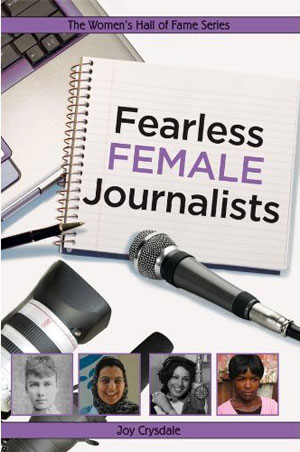
Fearless Female Journalists is a set of ten short profiles of female reporters, photojournalists, and newscasters hailing from various times and places over the last two centuries.

Among the women featured is one of the early pioneers of modern journalism: nineteenth-century American newspaperwoman Nellie Bly, a daredevil stunt reporter. Nelly Bly is perhaps most famous for circumnavigating the globe in seventy-three days in an era before airplanes, but she also took on assignments designed to do good as well as to make a splash. For example, she got herself admitted as a patient to the Women's Lunatic Asylum on Blackwell's Island in order to expose the terrible conditions there. In a later chapter, we meet Anna Politkovskaya, a Russian reporter who, despite her privileged origins as the daughter of diplomats, made the decision to risk–and ultimately lose–her life in order to report on the Russian occupation of Chechnya. (Politkovskaya was assassinated on October 7, 2006, at age forty-eight.) The book closes with a portrait of Thembi Ngubane, a young South African woman who recorded an audio journal about her life with AIDS as part of an effort to end the stigma around AIDS, as well as to push the South African government to acknowledge the tragic proportions of the AIDS epidemic.

The book is geared towards children–I estimate that it is most appropriate for an audience aged seven to eleven. The profiles are attractive and highly readable, complete with photographs and sidebars containing “fun facts.” The stories are entertaining and inspiring, and the selection of featured journalists reflects some variety in terms of era, type of journalism, and nationality (although the book still skews heavily toward heterosexual North American white women). Unfortunately, the book does have a downside–it is written from a “nice, liberal” standpoint, in which history is presented as an inexorable march towards progress, driven by a few exceptionally determined actors. This perspective glorifies individual high-profile “heroines” while erasing the history of communal struggle. It also obscures the reality that, in most cases, the few exceptional people who “make it big” do so not because they are more courageous or determined than thousands of others, but rather because they got lucky or started out with some “extras,” such as racial or class privilege.

The book reaches its nadir at the beginning of the final chapter, when it begins the profile of Thembi Ngubane by blatantly exoticizing her ethnicity: “Thembi Ngubane had a beautiful voice. Like her name, it was wonderfully African. Her voice flowed and lilted and swam around words, especially words with ‘r’ in them."

While I enjoyed reading Fearless Female Journalists and learning about the ten outstanding women profiled within, I could have happily done without the book’s uncritical, unconscious approach to the narrative of history and social change.

Review by Ri J. Turner

The Great Silence: Britain from the Shadow of the First World War to the Dawn of the Jazz Age

By Juliet Nicolson
Grove Press

The Great Silence starts out with a story that is never fun to tell—the story of a war—the First World War. Nicolson writes of a part of life that divides humans like no other, but also remedies that story with one that is incomparable in drawing us together—that of music. Everything in between is categorized under feelings such as, hopelessness, anger, honesty, and acceptance, to name a few.

The year of 1918 gave birth to a day that was supposed to represent a temporary suspension of hostilities by mutual agreement—a truce—for this is what Armistice means. Armistice Day, however, served more as a bandaid in the lives of millions of Britain’s inhabitants. Hostilities would fester for a lifetime for those who would never see their husbands, brothers, or fathers again. It also offered little consolation to returning soldiers who saw the end of the war, but were marked by it forever with their injuries and disfigurements.

Nicolson seems to pull back the curtain on that time making the reader feel as if they are in the midst of the goings on of these lives forever touched by the war. No one was spared of the atrocities, from the ordinary to the famous, such as, D.H. Lawrence, T.S. Eliot, and Virginia Woolf, who found time to write of Armistice Day while at a trip to the dentist.

The war and its residual effects would give rise to many unprecedented events, such as women’s right to vote (with certain restrictions), the increased blurring of class lines, and a music that would therapeutically liberate a people’s mental constraints. Not even the world of fashion was spared when French couturier Coco Chanel introduced innovative fashions that complemented androgyny while retaining femininity, thanks in part, to this jazz music. It seemed that the high hopes of winning the war and/or returning from it unbroken placed on the success of the war in the beginning came crashing down along with the nation’s morality (according to what the powers that be believed), due to its failure in both. Jazz music only served to divide the morale with its primitive elements wreaking havoc on the virginal principles of good people.

Nicolson weaves such a thorough and engaging social history that makes the reader feel personally privy to a time when many of our grandparents were not even a thought. Nicolson’s ability to tell a story complemented by first-hand accounts and access to the diaries of Queen Mary give the reader a virtual experience of what it was like to experience a time long gone, but not forgotten.

Review by Olupero R. Aiyenimelo

The Tyranny of Opinion: Honor in the Construction of the Mexican Public Sphere

By Pablo Piccato
Duke University Press

A coworker who saw this book sitting on my desk commented, “The tyranny of opinion? Isn’t the whole point of an opinion that it’s free from tyranny?” Not quite. Even today, public opinion can make or break a celebrity’s or politician’s career. In The Tyranny of Opinion, Pablo Piccato weaves an intricate web connecting a variety of aspects of nineteenth century Mexican society, examining the notion of how honor was closely tied to one’s place in society and how public opinion affected people’s public and private lives.

Since honor was one of the most important—if not the most important—form of social capital one could have, people went to great lengths to maintain (or attain) it. Journalists at the time, for example, had a dualistic connection to public opinion. On one hand, they were responsible for publishing the material that helped create it. On the other, many journalists were underpaid and worked in poor conditions, and their upward mobility in society was closely tied to their success as writers. As such, establishing one’s reputation sometimes took precedence over objective reporting, which in turn had an impact on how public opinion was shaped.

Love affairs, student protests, public riots, and duels are also subjects of analysis in the book. Lest one think that he focused solely on the honor of the upper class, Piccato actually covers a broad spectrum of race and class. He is also careful to include a gender-based component in his analysis. Although the book focuses largely on the honor of men, Piccato examines the reasons why women—especially “respectable” women—were largely excluded from public life. In his conclusion, he notes how his analysis regarding women, domesticity, political narratives, and moral economy serve to contribute to a larger academic conversation about these subjects.

Piccato grounds his work in close readings of primary sources, interpreting everything from published newspaper stories to court documents. His knowledge of the historiography on the subject is evident, as is his knowledge of Mexican culture during the late eighteenth to early twentieth centuries. The strength of the book lies in Piccato’s ability to convey the context of his analysis. The Tyranny of Opinion will surely serve as an excellence resource for Mexican history scholars.

Review by Melissa Arjona

Universal Women: Filmmaking and Institutional Change in Early Hollywood

By Mark Garrett Cooper
University of Illinois Press

In Universal Women, Professor Cooper launches a multi-disciplinary investigation into the mystery of why it was that Universal Film Manufacturing Company broadly supported women directors during the 1910s before abruptly reversing the policy. Drawing on philosophical, sociological, historical and structuralist interpretations of gender, culture, power, and institutions, Cooper’s study is positioned to show the interrelationship between art and the development of social norms, aesthetics, and political upheaval, and culture and epistemology in the United States.

However, readers looking for a narrative account of women director’s success and subsequent exile from Universal should look elsewhere. Cooper sets up his project by describing a confluence of events and personalities, some of which appear to be only distantly related, that played varying roles in this drama of gender. Some of these are not clearly explained, as when Professor Cooper explains the etymology of a word but does not clearly tie his explanation to the relationship he is trying to describe and defend.

His definitions and explanations take the following pattern: first, Cooper defines a word like “institution” or “organization” with an appeal to the Oxford English Dictionary. He appeals to the historical use of words to explore the concepts that fall under the definition and to point to a kind of etymological necessity: the word organization brings with it an inheritance from biology and so organizations are implicitly naturalized. Then he describes the word in its social development and practical usage. In the case of “organization” Cooper describes different sociological invocations of the word-concept.

Although in the next section, Professor Cooper describes the bi-coastal organization of Universal Film Manufacturing Company, he does not tie this historical description to the linguistic, historical and sociological discussion that preceded it. It seems that the reader is meant to intuit his purposes in such places and to develop the claims herself. I am not opposed to writing styles that foster critical thinking. But Cooper doesn’t make clear his purposes in so defining and explaining (for example). That is to say, I can look up definitions. I have access to the OED. I can read Durkheim and Weber. But I can’t get inside Cooper’s head to figure out what it is he intends by these things.

Reading Cooper’s book is a bit like watching someone’s film depicting a movie being made: it is interesting to see all the “extras” around the set–the camera crew, the lighting, the onlookers, the caterers, the director and producers and the landscape behind the backdrops and facades–but it is difficult to follow the plot of the movie being made.

The book is directed toward an academic audience; readers should be advised to plant their pinkies in the endnotes for quick reference. It will be most intelligible to those trained in film studies or who are such avid consumers of early Hollywood films and trivia that the characters are familiar–I had a hard time keeping track of names. The study is an interesting one, stressing the role that Universal played in interpreting and then enforcing what it means to be gendered as a man or as a woman. It would be interesting to see a slightly more narrative treatment of the subject–even a narrative that made clear the difficulties of narrative for such a diffuse phenomenon as the shifting meanings of gender–in order to appeal to more non-specialists.

Review by kristina grob

The Feminist Promise: 1792 to the Present

By Christine Stansell
Modern Library

The appropriate feminist response to The Feminist Promise is to send truckloads of gratitude to Christine Stansell, professor of history at the University of Chicago, who collected and digested a vast array of material, much of it ephemeral, and put it in a history book. Some of us hang on to the materials of history—like Laura Murra and my late friend Arlene Meyers, who preserved so much of the material base of second wave feminism as it was happening. Others, like Alice Echols, tracked down those of us who lived the history and captured these accounts lost in mainstream versions. The Feminist Promise takes a wider view of this idea, starting with the 1792 publication of Mary Wollstonecraft’s A Vindication of the Rights of Woman and ending with the problematic high profile attained by global feminism in foreign policy.

Neither from the “great woman school” nor the annales philosophy, The Feminist Promise is a narrative history of feminists in both their public and personal lives, and the great opportunities, victories, and defeats of a social movement. Stansell profiles the Grimke sisters, Elizabeth Cady Stanton and Susan B. Anthony, Betty Friedan, Gloria Steinem, Hillary Clinton, Mavis Leno, and other major figures; includes (and misses) some less well-known feminists in this “herstory”; and airs some dirty linen. The material masterfully presented makes The Feminist Promise worthwhile. It’s a long, scholarly, but remarkably rollicking read. My criticisms lie in the tone, the Freudian shaping, and the “promise” of feminism she posits.

A couple of decades makes a huge difference in the tone of even a friendly, and openly participating scholar. There’s a distance not just from lived experience but from living, wild, raw, social movement feminism and the introduction to the shorter anthology focused on sexual politics that Stansell helped edit, Powers of Desire. The Feminist Promise takes a necessarily more comprehensive view. Its changed tone may well result from the trough between feminist waves, the ascendancy of theory over the practice of a lived movement, and historicity itself. She takes note of the periods of lassitude that interrupt the movement forward, while ending on a note of problematic triumphalism with feminism as geopolitics.

Stansell’s organizing trope is the familiar one of mothers and daughters and brothers and sisters, which distorts the complexity of feminism by jamming it into a family drama. (To be fair, she acknowledges in her conclusion that feminism has now moved beyond the family romance.) Feminism’s almost bipolar, cyclic nature, and the back-and-forth between those confronting and those pragmatically working within the system, are two alternative explanatory devices that come to mind. Still, she who collects the records plays the tune. In trying to arrange a marriage between feminism and democracy, the promise of the title, she doesn’t really ask “whose democracy?” though she differentiates between feminisms.

Speaking of lived history, I have long misremembered this quote as from Susan B. Anthony:
Our history has been stolen from us. Our heroes died in childbirth, From peritonitis, Of overwork, Of oppression, Of bottled-up anger. Our geniuses were never taught to read and write, We must invent a past adequate to our ambitions. We must create a future adequate to our needs.
Because I first saw this quote on a poster illustrated with a woodcut of Anthony that hung in the women’s liberation office on Mintwood Place in the District of Columbia, my mind leapt to the conclusion this anonymous quote was Anthony’s, and stuck there. I stand corrected. More important, thanks Professor Stansell for clawing some history back.

Review by Frances Chapman

Philosophy: An Innovative Introduction: Fictive Narrative, Primary Texts, and Responsive Writing

By Michael Boylan and Charles Johnson
Westview Press

I was interested in Philosophy: An Innovative Introduction because I so thoroughly enjoyed Steven Church’s Theoretical Killings. Church’s book could appear to be a group of essays on many aspects of philosophy, but actually is as innovative as it is entertaining, ranging from the formally philological to rampant pop-culture rampages. If Theoretical Killings is a fun amusement park ride of the life of the mind, Philosophy: An Innovative Introduction is a more informative museum installation, with relevant interactive exercises at every turn. Muriel Rukeyser stated that, "The universe is made up of stories, not atoms." Applicable to the study of ethics and humanities as well as philosophy, the book utilizes a strong manifestation of ‘fictive narrative philosophy’—a perspective that respects the role of story in philosophical discussion.

Boylan and Johnson’s work innovatively seeks to engage by taking historical figures from dusty pages to serve as protagonists of life’s travails and intrigues. Aristotle, Plato, Kant, Hume, Murdoch, and King are included. Short stories are juxtaposed with excerpts from original texts. Students gain comprehension through indirect argument in the stories and via direct, deductive sections. Each group of readings is followed by study questions and essay suggestions as an aid to an understanding and construction of creative arguments. This is a work of relative diversity for its genre, with the Buddha accompanying Plato and Arendt balancing Aquinas. The attempts to humanize these historical figures can be inadvertently amusing—readers learn of Kant’s dinner menu and Marx’s choice of color in neckties—but the overall quality of the fiction is of the caliber indicated by Johnson’s MacArthur Fellowship and National Book Award. Recommended for both classroom and informal study.

Review by Erika Mikkalo

Italian Anarchism, 1864-1892

By Nunzio Pernicone
AK Press

Armed with footnotes and provisioned with a healthy bibliography, Italian Anarchism, 1864-1892 is not an easy read for the casual reader, or even the casual “antiauthorian leftist.” Isn’t that the euphemism for anarchist these days? Still, I don’t regret the time I spent reading—insurrection after insurrection, congress upon congress—the nearly 300 pages of text in Nunzio Pernicone’s history of these three decades. He writes not just about heroes like Errico Malatesta, but introduces the reader to supporting characters as well.

As an Italian-American who doesn’t even know her father’s real last name, I’ll admit I checked the index first, for Rossi, Russo, Rosso, anything that might have been shortened to our “boat name,” Ross. During these years my Italian grandfather (or was it his father?) immigrated to the United States, for lots of good reasons, as cataloged by Pernicone: the brutal introduction of capitalist farming methods, famine, and a cholera epidemic. I met Giovanni Russo, region of origin unspecified, who immigrated to Brazil and started an anarchist colony. Alas, I learned also that the Calabria, where my dad’s folks originated, was generally not in the vanguard during these turbulent times in Italy. I fear my ancestors really were the backward peasants the anarchists tried to energize.

But let’s move from mere genealogy to history. Not just women’s history has been “stolen from us,” and I am very grateful to AK Press for publishing this and other works of anarchist history and philosophy. It was almost as true in my young adulthood as it was for the “anarchist prince” Peter Kropotkin that one had to read about anarchism piecemeal in pamphlets. And of course, the reports of police agents are often the only written documents for historical research, as a glance at the footnotes and bibliography in the book reveals.

If we are patient readers, Pernicone’s friendly but balanced, serious, well-documented history fills a need for those of us on the left who are not “anarchist studies” specialists. It occasionally strikes a light, even humorous and lovingly critical, tone. The story about the overweight Michel Bakunin, Russian but the father of Italian anarchism, and his extrication from a carriage on an escape from Italy made me laugh out loud.

Without getting into the learning-from-and-repeating history discussion, the gifts of this book are numerous: the reader can actually feel the pressure militants exerted on themselves and their recruits to stage insurrection after insurrection even in the face of serious repression, understand the betrayal comrades felt when Andrea Costa “sold out” to become a politician, and appreciate the contingencies of history (i.e., how things might have gone another way). After all, anarchism was once a popular movement not just in Italy, and helped set the agenda for socialist activism, but like all movements it was composed of human beings with flaws as well as strengths.

How was this powerful international movement pushed to the fringe and then outside the boundary of political discourse, trivialized as a frivolous critique of organization, or slandered as the equivalent of terrorism in contemporary metropolitan dailies? Sometimes it is easier for feminists and participants in other contemporary movements to open our minds about own activism and the way forward by reading and thinking about a history a bit more distant and “other” than the anti-globalization actions in Seattle in 2000. Pernicone provides us with a history and leaves drawing parallels with contemporary times to the reader.

Do the multiplicity of newspapers started by Italian anarchists suggest a similarity to our current reliance on the Internet? Are activists today missing the boat as anarchists of this period did with early labor organizing? Read and learn.

Review by Frances Chapman

Dogtown: Death and Enchantment in a New England Ghost Town

By Elyssa East
Free Press

Anybody that’s ever lived on earth knows that the earth is the geography of our being. - Charles Olson

Dogtown is a rocky 3,000-acre swath occupying the interior centre of Cape Ann Peninsula in the northeast corner of Massachusetts. Gloucester, renowned as a fishing village, is located on Cape Ann (the fishermen of The Perfect Storm worked out of Gloucester). British colonists cut down trees and built homes on the peninsula in an area known as the Commons Settlement. Logging subsequently became important to the colony’s survival. Additional clearing by herds of voracious cattle denuded the cape, but by the late eighteenth century the population had abandoned the Commons and moved to the coastal reaches. Trees and bushes returned. The interior of Cape Ann has been a wilderness ever since—not wilderness comparable to northern Canada or the Grand Tetons, but wild enough for a place only twenty-five miles from Boston. This tract, including the Commons, came to be called Dogtown; in part due to packs of dogs that ran free there, in part because it attracted squatters on the downside of the socioeconomic scale.

Elyssa East, author of this intelligent book, discovered Dogtown in the 1990s when she was studying art history. A last-ditch attempt to complete an assignment led her to Marsden Hartley, the important—if little known—American Modernist painter. Hartley, who was gay, lonely, and suicidal, stumbled onto Dogtown, painted his best landscapes there, and consequently experienced a spiritual renaissance. East, too, was feeling a loss of the “hopeful sense of discovery and wonder.” She went to Dogtown to see if she could find her own renewal. Dogtown is the result of her ten-year search.

What she discovered was a region with an extraordinary, schizophrenic spirit of place. Just as Hartley had painted there, the renowned postmodern poet Charles Olson had employed Dogtown creatively in his signature work, The Maximus Poems. Other artists, and many a regular citizen, found there a life-affirming inspiration. Others thought it a wasteland, a haunted, foreboding place to be avoided. Some found madness and tragedy.

In 1984, Anne Natti, a teacher, had been brutally murdered in Dogtown. She was walking her dog when attacked from behind, her skull fractured by a forty-pound rock. The assailant stripped her, but did not rape her. He hid her still-alive body in a copse, stuffing her face into the muddy ground. She died slowly and horribly. The murderer was a Gloucester boy with a previous conviction for exposing himself. Cape Anners took him to be strange, but never a potential killer.

Dogtown has many good portraits of locals, people whom East interviewed. It is interestingly structured, alternating chapters from the remote past with an account of Anne Natti’s murder, the investigation, and the trial, all of it interwoven with East’s explorations of Dogtown’s geography and her inner quest. This varied content makes for a rich book, although the murder at its centre, even flatly and forensically narrated, makes for harrowing reading.

East has her facts mostly in order, and she is enlightening on certain aspects of colonial history, deploying her woman’s awareness for a different look at the Revolutionary War—so storied in American myth, yet which left behind many sorrowful, unsung widows forced to fend for themselves. In a work so replete in fact, errors are nearly inevitable: East calls Robert Duncan a novelist, but he was a poet, and although William Carlos Williams, arguably the greatest twentieth-century American poet, was invited to teach at Black Mountain College, he never did. The book could also use more maps; the lone one in the book is not nearly adequate for the text. A photo section would have been a worthy addition, too. These are small-time caveats. In all, East has produced a fine book—her debut—and of noteworthy consequence.

Review by Neil Flowers

From Criminality to Equality: 40 Years of Lesbian and Gay Movement History in Canada

By Nancy Nicol
Intervention Video


I was around eight years old when I went to my first Pride parade with my mom and her girlfriend. I was fourteen when my mom went on national television for a campaign demanding the right to marry for lesbians and gays. And I was twenty-five when I married my long-term girlfriend within months of same-sex marriages becoming legal in my country. In many ways, the struggles for social equality and equal rights for LGBTQ people have been tied to key events in my life, and these days at Pride, as a thirty-two year old, I often feel like an old timer, like a living, breathing embodiment of history.

I know every detail of key steps in the lesbian and gay rights movement since the late 1970s because they have been a part of me. But when I say I know every detail, I mean every detail of the German lesbian and gay rights movement. When I moved to Canada a few years ago, I realized that I knew virtually nothing about how these struggles have played out in my new home.

Nancy Nicol’s film series From Criminality to Equality closed that gap in knowledge for me. On four DVDs with a total playing time of over six hours, Nicol chronicles the history of the lesbian and gay rights movement in Canada. Starting with the struggles over anti-discrimination clauses in the Human Rights Act in the 1970s and '80s, to the fight over marriage equality in the late 1990s and early 2000s, wach DVD focuses on separate issues within a certain timeframe. When watching the entire series, the interconnectedness of these issues through time becomes very apparent. Key individuals of the lesbian and gay rights movement appear again and again, and the films show a clear progression of issues from the step out of criminality to societal and legal recognition of same-sex relationships. Each film is jam-packed with information, and while some segments are a bit lengthy, the series provides an enlightening summary of the past forty years of LGBTQ history in Canada.

The most moving of the four DVDs for me was Politics of the Heart, which portrays lesbian and gay families in Quebec as they fight for equal parenting rights. Not only did it remind me of my own history growing up with two mothers, it also presented a perspective the other three films lacked. It reminded the viewer that even in times when lesbian and gay people didn’t have the same rights as heterosexuals, we found unique and often very creative ways to live our lives and live them well. Politics of the Heart shows that queer families existed in spite of not being recognized by law or the broader society. As one friend put it: “I would have liked to have seen less about the fights and more about our alternative lives. We don’t just exist in opposition to heterosexuals.”

While it is certainly important to remember and highlight that the path to equality has been a bumpy one, as someone who has lived, breathed, and been defined by the struggles for LGBTQ equal rights, the film series missed an opportunity for showcasing one of the key features of that distinguishes the lesbian and gay rights movement from many other social movements: that we love who we love, not in opposition to something, but in embracing who we are and what makes us happy.

Review by Annette Przygoda