Showing posts with label science. Show all posts

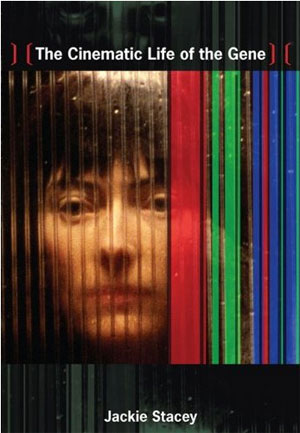
The Cinematic Life of the Gene

By Jackie Stacey
Duke University Press

The Cinematic Life of the Gene is a challenging and complex collection of essays that uses cinematic representations of genetics and cloning to consider the cultural impact of genetic breakthroughs. Jackie Stacey draws on some of the most well known theoretical works regarding cinema, art, and the body to consider the fascinating link between cinema and genomics. Her essays cite everything from feminist and psychoanalytic theory to theories of passing and reassemblage. It is the text's interdisciplinary nature that makes it both challenging and significant; cinema scholars, scientists, and feminists alike will find this work compelling. Still, The Cinematic Life of the Gene roots its examinations in the moving image, and serious scholars of the cinema (and particularly of science fiction cinema) will benefit from this “cultural study of film.”

Stacey’s work centers on an interesting premise: that cinema is uniquely tied to the science of cloning, since both are “technologies of imitation” which illustrate “a fascination with the boundary between life and death, and with the technical possibilities of animating the human body.” More than their fascinations with life and death, however, Stacey is interested in how scientific conceptions of cloning and genomics work concurrently with cinematic representations in creating “aestheticized forms of envisioning the human body.” In other words, scientists and filmmakers alike have visually codified genetic manipulation as a means of understanding and coping with its cultural and social ramifications. Stacey examines these attendant fears and desires surrounding genetic manipulation, referring to them as “the genetic imaginary,” a theoretical and cultural space in which “the fears and desires” around cloning and genomics are expressed and explored. She utilizes analyses of films from multiple genres (science fiction, the art-house thriller, feminist independent film, and body horror) to examine how fears surrounding genomics are expressed through both narrative and visual structure.

Stacey's explorations of the cultural impact of genomics on the psyche are fascinating but rather overwhelming, particularly because of her heavy dependence on prior theoretical works by the likes of Jean Baudrillard and Walter Benjamin. Unfortunately, Stacey focuses so heavily on explicating her predecessors’ works that she tends to obscure her own thoughts; her contributions to these theories get lost amongst the jargon of her theoretical ancestors. Stacey serves her reader well by anchoring her arguments in popular works like Gattaca and Alien: Resurrection, making her work more approachable and comprehensible. She succeeds when she pares down her writing and engages with fewer theoretical texts in an essay; for example, she provides an inspired and fascinating examination of feminine masquerade in the science fiction film, applying the theories of well-known feminists Luce Irigaray and Mary Ann Doane to constructions of men in narratives of cloning.

The Cinematic Life of the Gene is not for the novice cinema or science fiction scholar, but those seriously engaged in a cultural study of the moving image or genetics would serve themselves well to tackle it. Scholars aligned with feminist and queer theories will also find rich fodder for thought in Stacey’s attentions to feminism, gender, and sexuality on screen.

Review by Joanna Chlebus

Living Downstream: An Ecologist’s Personal Investigation of Cancer and the Environment (Second Edition)

By Sandra Steingraber
Da Capo

In the original 1997 edition of Living Downstream, Sandra Steingraber was the first to compare data on toxic releases with data from U.S. cancer registries. In the last ten years since this edition was published, there has been rapid growth in the understanding of environmental links to human cancer and new published findings that corroborate the evidence Steingraber compiled in 1997. With a Ph.D. in biology and a Master's degree in creative writing, Steingraber has been the recipient of many awards, including Chatham College's Rachel Carson Leadership Award in 2001 and a Hero Award from the Breast Cancer Fund in 2006. Living Downstream is both a personal story of Steingraber's battle with cancer and her investigation into the potential sources of carcinogens released into the air, land, and water in and around her hometown of Normandale in West-Central Illinois, as well as in other areas of the United States.

Thirty years ago, when Steingraber was a 20-year-old college student, she learned that she had bladder cancer and was surprised when her urologist asked her whether she had ever been exposed to textile dyes or worked in a tire factory or the aluminum industry. The author later learned that bladder cancer was considered a quintessential environmental cancer. In other words, there was more evidence linking it to toxic chemical exposure than to any other type of cancer. However, although bladder carcinogens had been identified, they continue to be used by industry even today. The obvious question, of course, is why have these chemicals not been banned. The reader quickly discovers that cancer causation is complex, as is proving the source responsible for this disease.

The author reminds her readers that of the 80,000 synthetic chemicals currently in use in the U.S., only about two percent have been tested for carcinogenicity and only five have been banned under the U.S. Toxics Substances Control Act since 1976. We also learn that the U.S. environmental regulatory system does not require exhaustive toxicological testing of chemicals before they are marketed. Legal limits are set on chemical releases, but, as we recently learned with bisphenol A (BPA), trace amounts can be more harmful to humans than higher doses. Moreover, we are often exposed to many contaminants simultaneously in the air we breathe, the water we drink, the food we ingest, and the land where we live and work.

Often compared with Rachel Carson, Steingraber makes some compelling arguments in favor of the precautionary principle, or the better-safe-than-sorry approach to chemicals. She also advocates the principle of reverse onus, which holds producers responsible for proving that their products will not harm the public, as is the case for pharmaceutical companies.

Sandra Steingraber has the expertise in science to give her the necessary authority to present an investigation of this scope and the impeccable writing to make it accessible to a wide audience. Although some environmental texts can be dry, Steingraber's writing and personal story make for a compelling read. Her drive and commitment to finding the missing pieces of the cancer jigsaw puzzle are humbling. I only wish that she had included a map of Tazewell County, Illinois, which we repeatedly visit throughout the book. A few diagrams of some the atoms she describes would have also been nice.

In short, if you have ever thought that the environment may have played a role in the death of a loved one and would like to know more, this is the book for you.

Review by Heather Leighton